
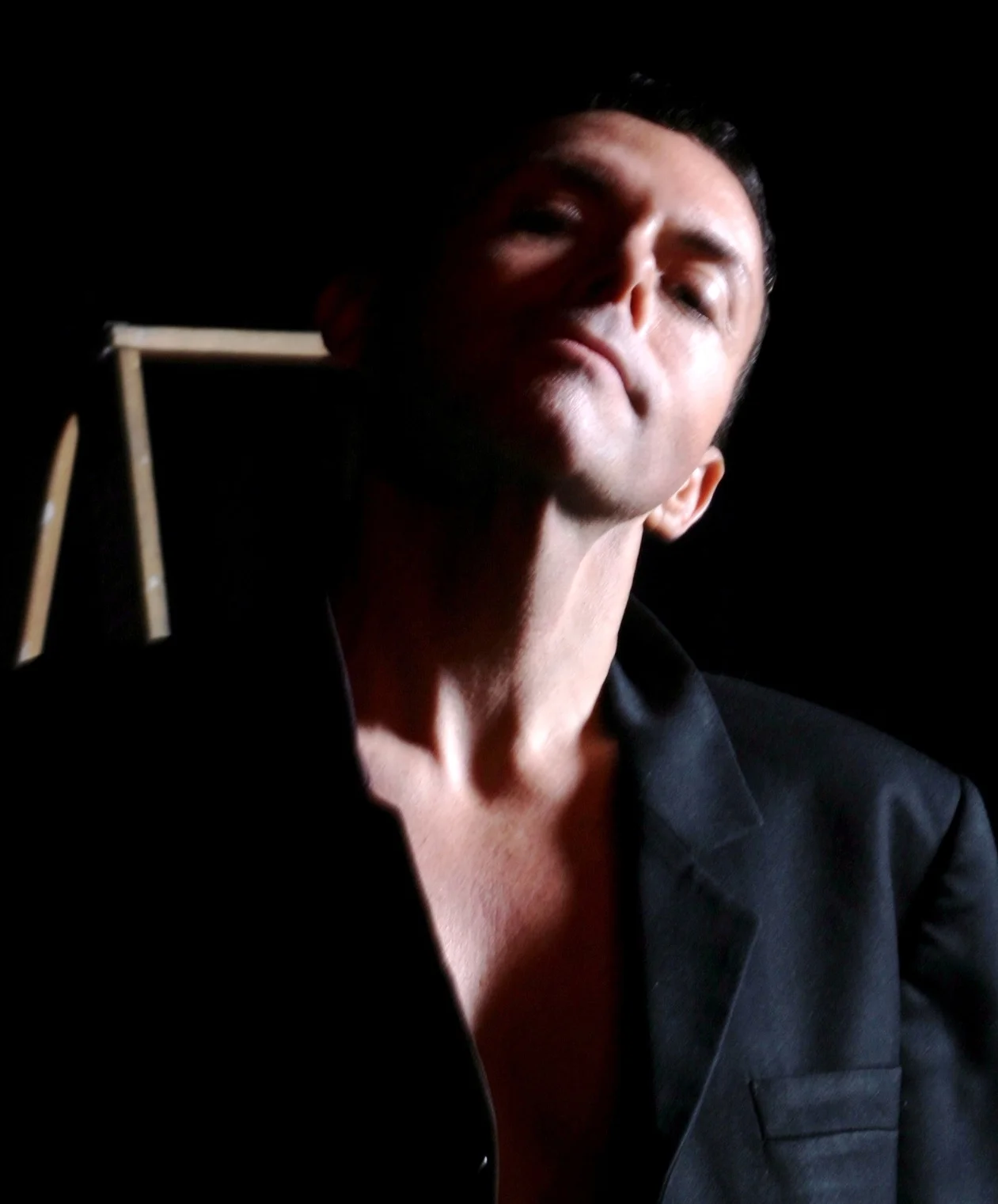
Richard Barone
Biography
Social Media
Richard was born and raised in Tampa, Florida. He actually was a DJ at the age of seven on a local Top 40 station and as a teenager he befriended and produced Tiny Tim when he was performing in the area. In 1977 he hitched a ride to New York with the Monkees touring back up group (CBGB stalwarts the Laughing Dogs) and lived in a small room in their practice loft as he attempted to take on the big city. This and many other tales can be read in his memoir Frontman: Surviving the Rock Star Myth, a book that functions as a how-to be an entertainer guide as well as a gimlet-eyed autobiography.
After moving over the East and Hudson Rivers he found himself in Hoboken New Jersey where Steve Fallon was just opening the famed music venue Maxwell’s, the club that maintains its status as the last of the metro areas 70s nightspots. Along with the likes of the Feelies, the dBs and the Individuals, the Bongos put Hoboken on the map as a place where young musicians could get a start. Many would come from all over the USA to place roots in the metro area’s pre-Williamsburg indie-rock capital.
The Bongos were the first group to get signed to a major label on the strength of Drums Along The Hudson an album that featured a top CMJ Radio single “Mambo Sun” (his first Bolan cover) as well as “In the Congo” and “The Bulrushes.” The group became a favorite in the emerging college rock circuit and toured the US and Europe sharing bills with the likes of the B-52s and R.E.M.
Their song “Numbers With Wings” became a broadcast favorite in the early days of MTV. The Bongos released two albums and an EP and left an unfinished album for Island Records called Phantom Train. In 2007 the group re-united for the Hoboken Music and Arts Festival and were given the key to the city by the mayor for their pioneering pop.
Richard would go on to make many solo albums including the much lauded Cool Blue Halo that found him experimenting with the cello playing of Jane Scarpentoni while delivering his songs in a chamber-pop setting.
In the last decade Richard has worn many hats writing with others, and producing large musical events. Moby recently got involved with a re-mix of the Bongos classic track “Bulrushes.” And the B-52s’ Fred Schneider has had Richard produce, arrange and co-write for him on numerous occasions. Finally as the decade winds down he moves on with Glow, a singular burst of optimism with the power of a sunset and the sunrise that follows.
Releases
Glow
Glow is the new solo album from Richard Barone, guitarist and vocalist for cult faves the Bongos. The album is a sonic delight; like a lost solo Beatle album from a glam-rock future-world. After taking a break from performing to produce others and write a book, Barone is back working with his long time friend and favorite producer Tony Visconti (along with Steve Addabbo, Jill Sobule and others) Glow positively glows with great songs like "Gravity's Pull," "Yet Another Midnight" and a captivating cover of Marc Bolan's "Girl." The king of chamber pop does not disappoint on this stunning new addition to his catalog.
The album started as a somewhat casual collaboration between Barone and Tony Visconti. Richard had always wanted to work with Tony from the time his label RCA nixed the idea of having Visconti produce the Bongos major label debut. Most of the tracks were written in the studio, some came together very quickly like “Girl” and others like “Sanctified” became elaborate Tony Visconti productions. The album utilizes lots of vintage synthesizers and obscure music making devices that Tony gathered from working on sessions with Brian Eno, David Bowie, T. Rex and others.
Glow also features some more modern state of the art gear that Richard picked up through his close collaboration with Gibson Guitars, including the Gibson Digital Les Paul guitar. Each string has the ability to be recorded on it’s own individual track. The title track was written when Richard stopped by producer Steve Addabbo’s studio to pick up a hard drive and showed him the Digital Les Paul. “Walking through Manhattan, I started hearing the arpeggio chords of “Glow” in my head,” says Richard, “Then some words and a melody became attached, set to the rhythm of my walking. When I got to the studio, I couldn't wait to show Steve the guitar, plug it in and demonstrate the possibilities. I started playing "Glow" and asked if we could record it. It was amazing how quickly it came together. I didn't have any lyrics at all for the bridge, but we decided to start recording anyway. When it came to that part, I suddenly belted out, "You're not alone! You are the glow! You're not alone" and that was that. We only did one take.”
The song is reprised at the end of the album as an elaborate instrumental that features cellos and violins dueling with vintage synths. With all those individual strings being recorded there were more than 120 tracks to be wrestled to the ground.
Amid the high tech studio recordings Glow also has some lo-fi parts that just sounded right in sequence. The Garageband-generated “Radio Silence” comes off as a Euro-Vision style four-on-the-floor classic and was recorded in Richard’s apartment on a laptop. The Paul Williams co-write “Silence Is Our Song” is actually from a live radio broadcast on New York WFUV-FM DJ Vin Scelsa’s “Idiot’s Delight” program.
How did Richard end up writing with the guy who gave us such pop radio classics as “Rainy Days and Mondays” and “We’ve Only Just Begun”? Did you know Paul wrote the B Side to Tiny Tim’s “Tip Toe through the Tulips”? Richard did. He met Williams at a tribute show and the two writers from different eras immediately hit it off. After a number of delays Richard made it out to Paul’s house in California and an all day marathon writing session ensued.
“I started strumming chords as he circled his living room spouting phrases I quickly jotted down on a yellow legal pad. We wrote like that all day. The next morning, at breakfast, I sang him what we had come up with, and played him a quick demo I had recorded on my MacBook. "One more thing," he said. "When you record it, at the very end, say 'listen.'"
Another frequent Barone collaborator is Jill Sobule. Among other songs, Barone co-wrote “Bitter” for her album Pink Pearl and Jill returned the favor on “Odd Girl Out” the song tells the true story of a lesbian in the pre-Stonewall days of the West Village. This time Richard scribbled down lyrics while Jill strummed.
We look forward to what Richard will illuminate next.